Castaways in an Ocean of Advertising

In the second half of 2020, at Bocconi, I attended the Market Research course. The exam involved conducting field research. In doing so, I tried to answer this question: why, how and when should you run programmatic advertising for people born after 1995?
Programmatic advertising: unknown and hated
Unknown to most people, programmatic advertising is the most common form of advertising on the web. Think of the annoying banners and pop-ups that appear while browsing. 90% of the time they are advertising spaces sold through the programmatic allocation system. In simple words: within a few hundredths of a second from when we open a web page, an automatic auction decides which advertiser is the highest bidder and the most consistent with our interests, and shows us their ad.
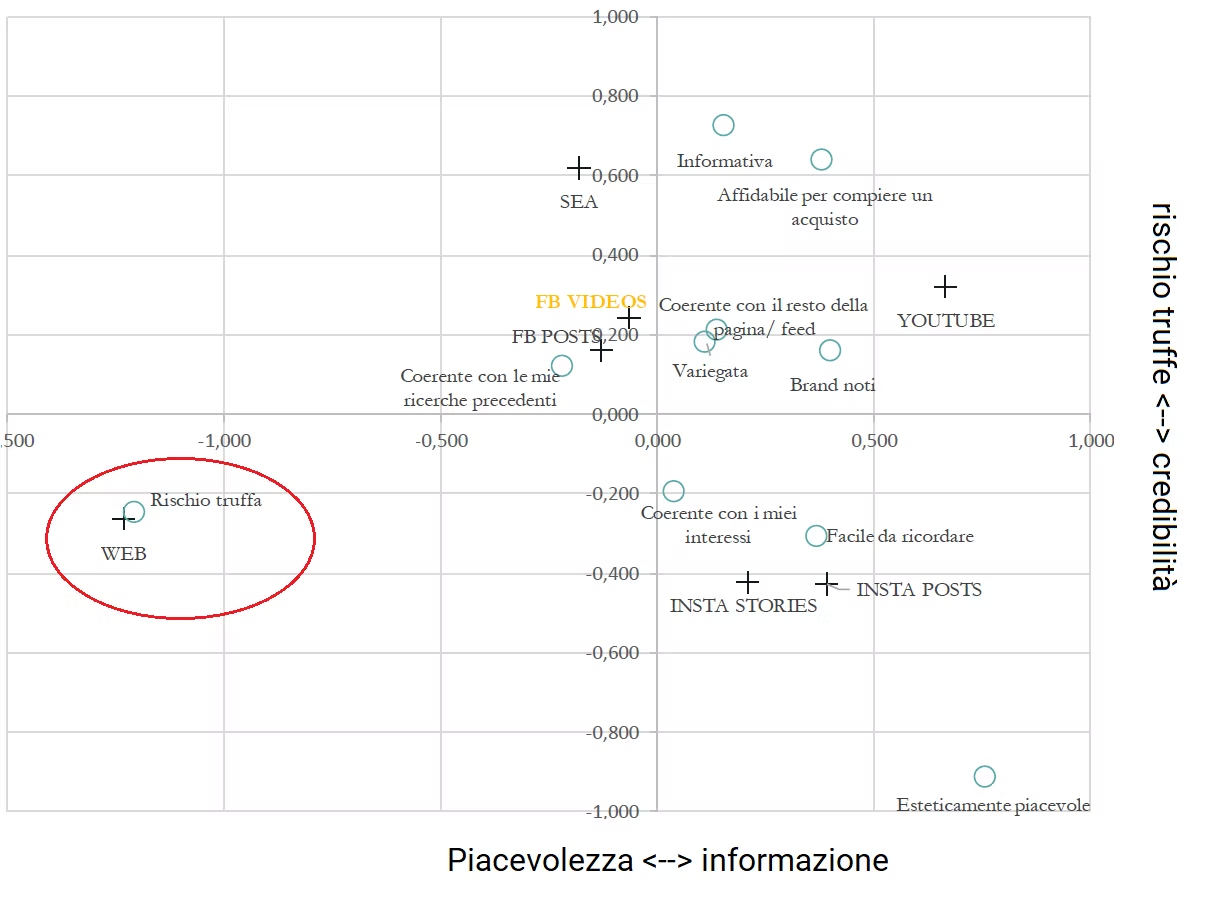
So far, beautiful. But there’s a problem: advertising on websites is considered unreliable by people under 25, and not very informative — or at least that’s what my team’s positioning analysis showed (besides me: Claudio Villone and Beatrice Colombo).
As you can see in our positioning map, programmatic advertising on the web sits practically in correspondence with the “scam risk” vector.
So, the big question: WHY, WHEN AND HOW SHOULD YOU RUN PROGRAMMATIC ADVERTISING?
Online advertising: valuable allies for every occasion
The first step was to understand how the different online ad formats positioned themselves in the mind of the under-25 internet user — not only in general, but at every stage of the marketing funnel. We submitted a questionnaire to more than 600 students and obtained a lot of data, including the positioning map above.
Reliability vs. degree of information conveyed: these seem to be the two variables that guide the user when positioning the different forms of advertising in their head.
Which advertising, when
What we found genuinely amazed us:
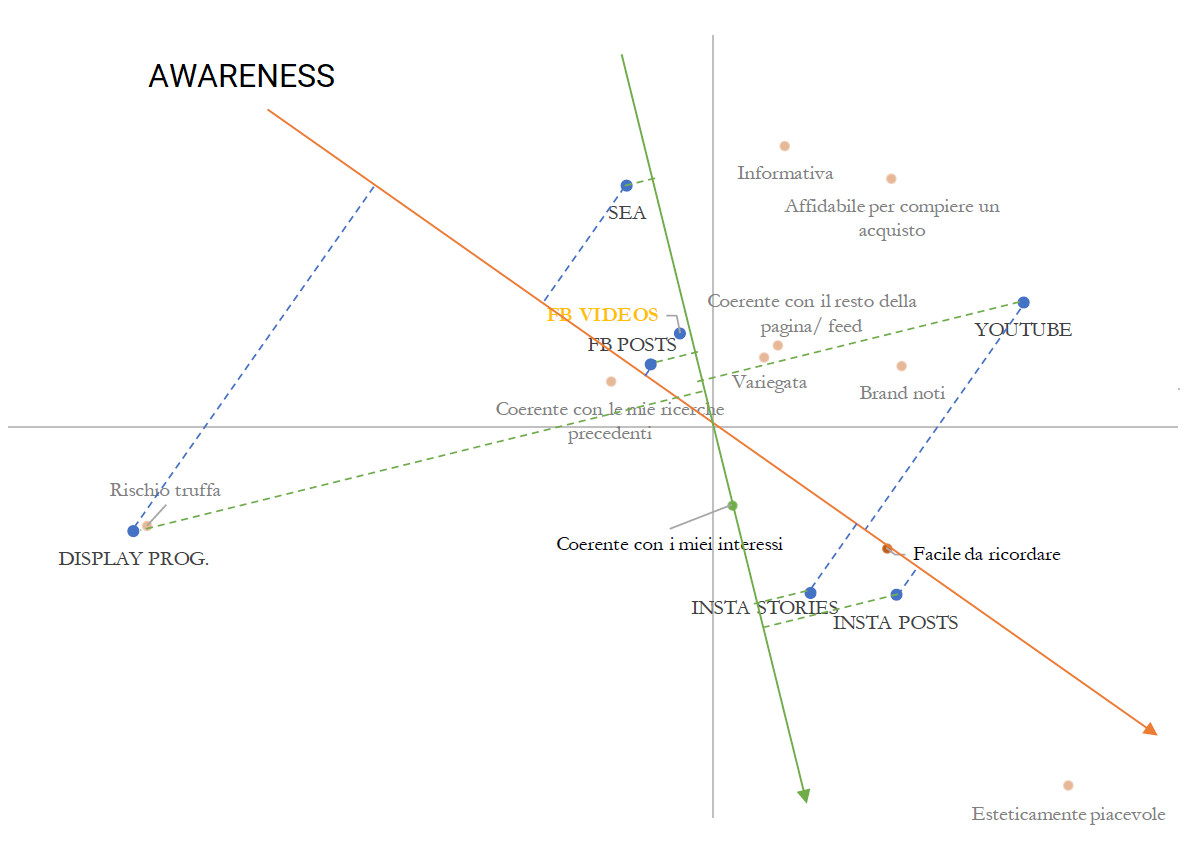
- Instagram is fabulous for introducing your product to as many people as possible. The advertising there is easy to remember and very consistent with people’s interests — a sign that the ad-allocation algorithm relies heavily on this.
- In the consideration phase, advertising on search engines has no rival. It is informative and naturally consistent with the search intent of that moment.
- In the purchase phase? It will surprise you, but it’s YouTube — together with search-engine advertising — that is considered most reliable as the last step before a purchase.
So when should you run programmatic?
Apparently the best phase is consideration. The user has already recognised they need a product and is more or less actively looking for a model to buy. In that phase, any kind of stimulus might seem interesting.
A first suggestion: in this phase, run programmatic by insisting on its function as a stimulus for consideration. Advertise discounts, special offers, or a differentiating feature of the product.
But is Gen Z all the same in front of advertising?
The answer (unfortunately) is no. This means it is very important to vary the copy and provide different versions for each need. The differences already arise from the opinion they have about advertising.
A first qualitative analysis revealed a twofold relationship: on one hand, some people appreciate the extreme personalisation and the chance to discover new products; on the other, a sizeable cluster considers it misleading and annoying, especially because it leads them to buy products they don’t really want.
At a deeper level of analysis, we saw that highly personalised advertising does not bother people. The perception of anxiety at being “controlled” arises only when advertising is badly targeted.
A first conclusion: different profiles, different advertising
We tried to better profile our under-25 audience. A fundamental difference is between men and women.
For girls, more explanatory, more informative advertising is preferable: the eye searches for detail. For the male counterpart, it’s impact that counts. So on one hand a more refined, informative copy; on the other, a stronger use of colours and memorable phrases.
More transversally, we found 5 profiles based on the responses and preferences given to different forms of advertising. To be very concise, the differences vary according to the need for information: some, naturally more curious, love discovering new brands and products; others are inclined to click on ads only if they get important information about the product they’re looking for; others — distracted — need to be bombarded with the same ads before they even notice them.
It is natural to conclude that there’s no such thing as prêt-à-porter advertising: it’s essential to adapt the communication to each cluster of users.
Not an answer, but a process
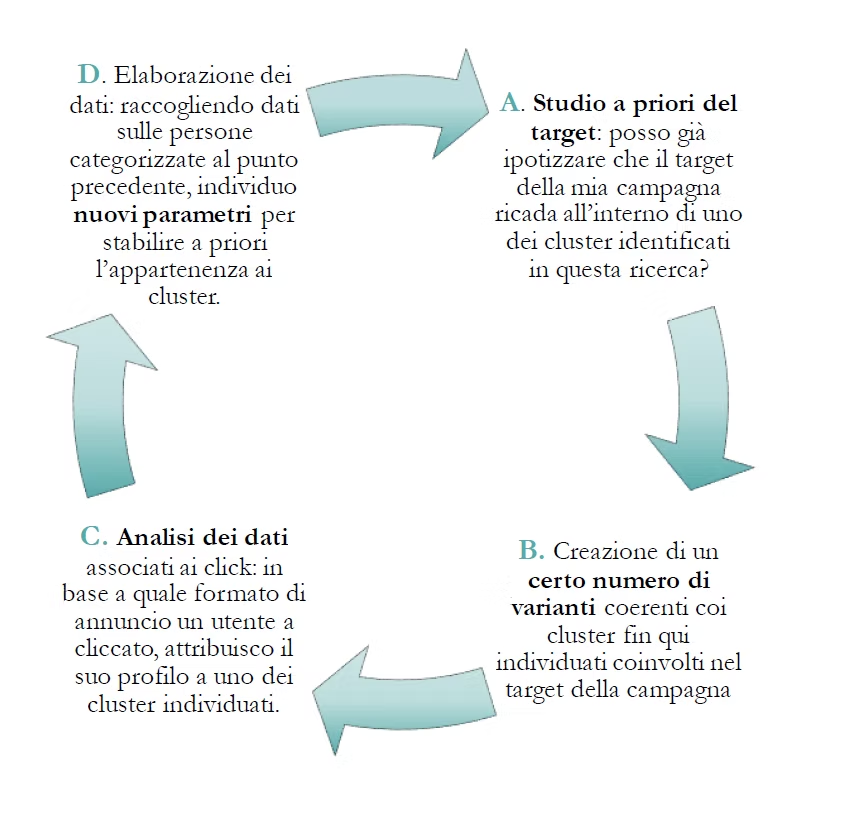
The answer is: there is no answer. Or rather — if you’re looking for a set of elements that make it immediately obvious that a person belongs to a cluster before launching the campaign, then none of this exists.
The solution does exist, though it’s harder to obtain. It’s a matter of establishing a process: for every product, different forms of advertising are launched, each designed for a different cluster. At this point you try to understand not so much which is better, but rather which types of people respond positively to that stimulus. In a second round, the previous ads are proposed again, but this time targeted in a more restricted way.
It is not about finding the best-performing advertising for everyone, but the most interesting advertising for each one.